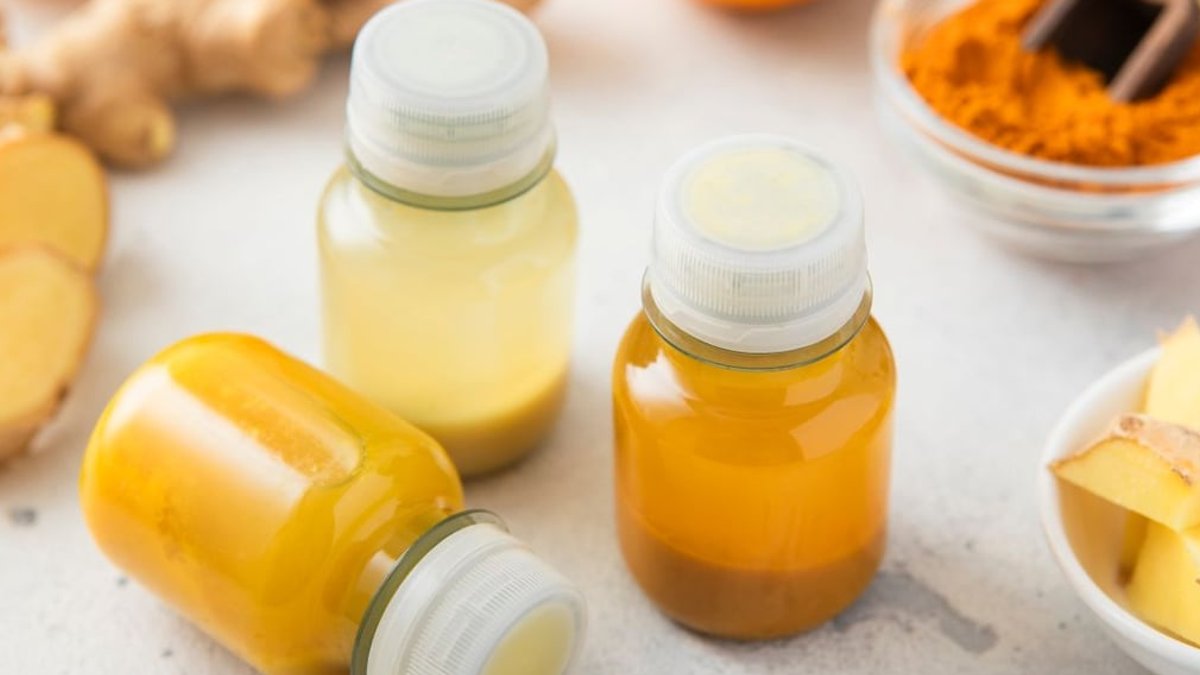
A quality manager walks into the production lab on a Monday morning holding two bottles of the same turmeric beverage. One is last week’s approved sample. The other came off the filling line 10 minutes ago. Side by side, they do not match. Production insisted nothing changed: same formula, same recipe and the supplier’s certificate showed the color concentrate was within specification.
Jack Ladson, who leads applied technology at HunterLab, says this situation occurs daily in food production plants. After the U.S. Food and Drug Administration withdrew FD&C Red No. 3 and urged manufacturers to eliminate the six other petroleum-based synthetic dyes, countless items are being reformulated using plant-based colorants instead of petroleum sources.
Challenges of Natural Colors
Plant-derived colorants originate from crops whose characteristics depend on rain, sun, soil composition, harvest date, extraction method and storage conditions. Because each harvest differs, identical crops do not exist. Nevertheless, shoppers anticipate that each bottle, yogurt or snack will appear identical to the version they purchased previously.
Bridging the divide between farm variability and shopper expectations cannot be achieved simply by purchasing a superior device; it requires establishing a full system. Ladson observes that firms often invest in high-quality spectrophotometers expecting uniform results, yet consistency does not automatically follow. He emphasizes, “The instrument is important. The method is everything.”
While a spectrophotometer can quantify hue, it cannot manage variability. Differences in color may arise from numerous sources, such as raw-material quality, processing temperatures, pH levels, particle dimensions, packaging, or even the technique a technician uses to fill the cuvette.
Building Specifications and Validation
Teams must determine acceptable variation levels before selecting a specific ΔE value. Tight limits increase rework and scrap, while overly broad tolerances risk customer complaints. GNT’s Alice Lee noted that ΔE is just one data point, as shape, texture and gloss also influence appearance.
Talking Rain Beverage Co. validates raw material strength through spectral scans and particle-size testing. They stress applying the color in the actual beverage matrix under heat or light. The company tracks data from production runs to detect gradual drift, allowing teams to adjust conditions before a batch fails.
Defining an Approved Visual Standard
Measurements aim to distinguish genuine product differences from instrument-induced fluctuations, enabling manufacturers to determine if a hue shift stems from the product or the testing procedure. Ladson recommends first establishing an accepted visual benchmark reflecting consumer expectations. Only after that should a testing protocol be developed, detailing how samples are prepared, the spectrophotometer geometry, illumination and observer parameters, cup type, path length, temperature, and the count of replicates.
If those specifics are overlooked, today’s data cannot be relied upon for future comparisons. When they are correctly defined, color transforms into an objective production metric accessible to formulation teams, operations, quality assurance, suppliers and clients alike. After a protocol is in place, groups must determine the permissible level of variation.
Food and drink categories do not share a universal ΔE pass-fail threshold. ΔE quantifies the numerical gap between two color readings, provided the measurements follow standardized conditions.
Products colored naturally—like spices, coffee, cocoa and fruit-derived foods—might need ΔE00 values of 2–3 or greater, reflecting the inherent variability of their raw inputs. However, the tolerance figure is not set beforehand. Ladson notes that firms seldom start by picking a ΔE number; instead, they first consider the amount of variation customers will tolerate and then align instrument tolerances accordingly.
Alice Lee, technical marketing manager at GNT, warned that ΔE represents only a single data metric and should not be the exclusive criterion for acceptability, since factors such as shape, texture and gloss also affect perceived color. Talking Rain Beverage Co., the producer of Sparkling Ice, employs a comparable two-pronged method, combining CIELAB readings with visual assessments.
Manisha Polur, the company’s technical innovation manager, said consumer acceptability ultimately helps establish useful boundaries. Knowing where natural pigment variation becomes noticeable or unacceptable allows the company to build raw-material specifications and process controls around that range rather than trying to eliminate variation altogether.
Once production begins, the individual measurement becomes part of a larger pattern. Talking Rain tracks data from previous production runs alongside inline color measurements to detect gradual drift, Polur stated. Raw-material specifications are verified before batching, while historical data gives R&D and QA teams time to adjust processing conditions or the formulation before a batch moves outside specification.
Consistency starts in the field. The most powerful lever on natural color consistency is pulled long before anything reaches a lab. It is pulled at the farm. Natural pigment content varies with crop variety, soil, rainfall, temperature and harvest timing.
Even two fields of the same crop can yield different pigment levels, which is why suppliers standardize products before they ship. Oterra, which runs a backward-integrated supply chain from breeding through farming, extraction and production, maintained that control over the raw material can significantly improve consistency.
For example, its Hansen sweet potato, developed specifically for its coloring properties, is bred for pigment strength, shade performance and processing consistency. Raw materials are also monitored for pesticide residues, heavy metals, mycotoxins and microbiological risks.


