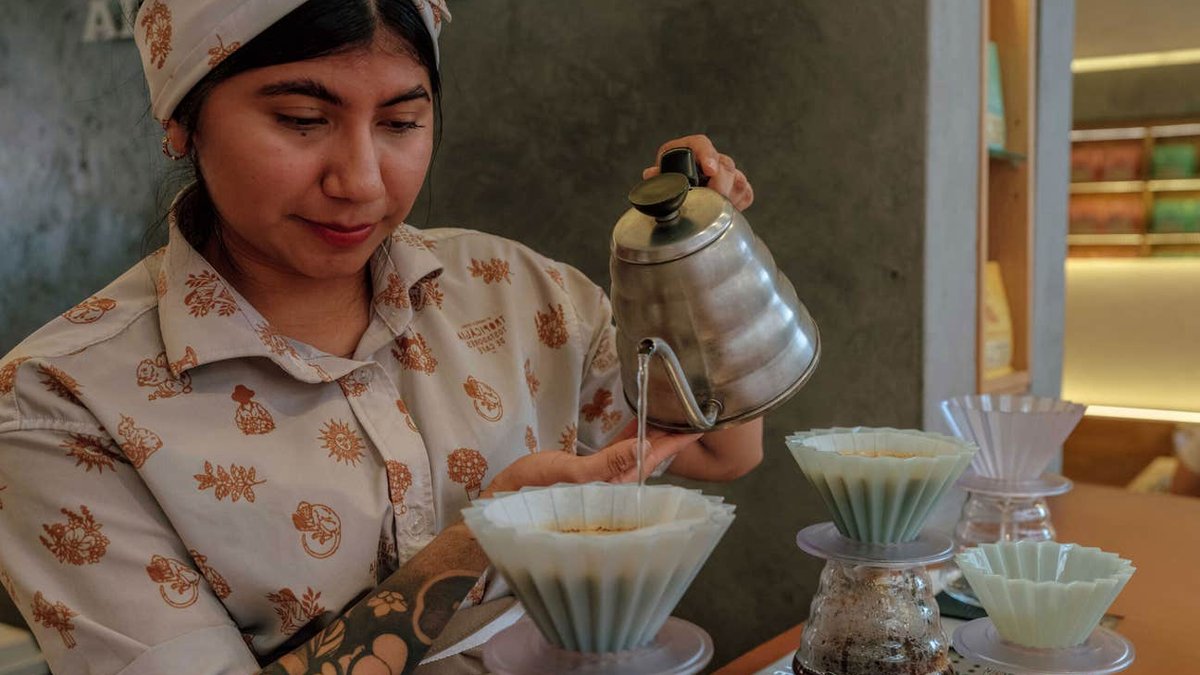
Colombia’s coffee production surpasses what most countries consume annually. In 2025, the country generated 1.81 billion pounds of green coffee. Yet despite its standing as the world’s third-largest producer, over 90% of that output remains abroad. Colombians instead rely on tinto, a strong, sweetened black coffee made from commodity-grade beans, typically served in metal pots or cloth filters.
The tinto holds deep cultural roots, tied to Sunday afternoons spent with friends at street corners. However, a growing movement now champions local consumption, led by specialty roasters who emphasize Colombia’s unmatched bean diversity. The country’s varied terrain—from Nariño’s volcanic peaks to Huila’s misty slopes—provides ideal growing conditions between 4,000 and 6,500 feet above sea level. This elevation, combined with tropical fruits like tamarind, guava, and passion fruit, yields flavors ranging from citrusy brightness to earthy depth.
Bogotá has become the center of this transformation. The city’s specialty cafés now feature single-origin pour-overs, fruit-infused cold brews, and wild-processed coffees that challenge tradition. Each cup offers a glimpse into Colombia’s regions, whether the tangy notes of Huila or the berry-like sweetness of Nariño. One writer who relocated to Bogotá three years ago noted they only began to appreciate coffee’s subtleties after exploring the city’s cafés.
Bogotá’s Leading Specialty Cafés
Tropicália Coffee distinguishes itself with its design-focused spaces and rotating supplier list, including small producers, women-led farms, and competition-grade beans. Located in El Nogal and Quinta Camacho, the café serves tamarind-infused cold brew alongside avocado toast topped with mango pico de gallo. Its standout feature is the tasting notes paired with each filter coffee, guiding customers back to the beans’ origins.
Lohas Café evokes a colonial-era home through its design. Operated by Lohas Beans, a specialty exporter with decades of experience, the café specializes in competition-level Huila coffees. Its signature method involves frozen milk, stripped of water to enhance richness, perfectly complementing the bold beans. The minimalist setting and limited seating create an intimate, tasting-like atmosphere.
Read Also: Food Makers Use AI to Counter Tariff Squeeze
Azahar embodies this evolution through its Cata de Café, a rotating tasting of three coffees that showcases Colombia’s regional diversity. The café’s long-term producer relationships ensure above-market prices for farmers, a rarity in an industry still dominated by commodity trade. Pairing cold brew with an in-house almond croissant raises the experience.
For hands-on engagement, Varietale offers multiple brewing methods, including V60, Chemex, and French press, to highlight the distinct flavors of its rotating selection of coffees. The café’s unpretentious cantina-like atmosphere makes it a favorite for both specialty coffee enthusiasts and those who simply enjoy a tinto.
Café 18 provides a wide selection of Colombian coffees, typically offering around 15 varieties with at least five available at any given time. Some beans are sourced through Colombian coffee auctions, giving the café access to distinctive lots from producers. The café’s open preparation process adds to the experience.
Colo Café has several locations across Bogotá, but its sprawling Usaquén café is particularly noteworthy. The space unfolds around trees far older than its walls, creating a serene setting for enjoying specialty coffee.


