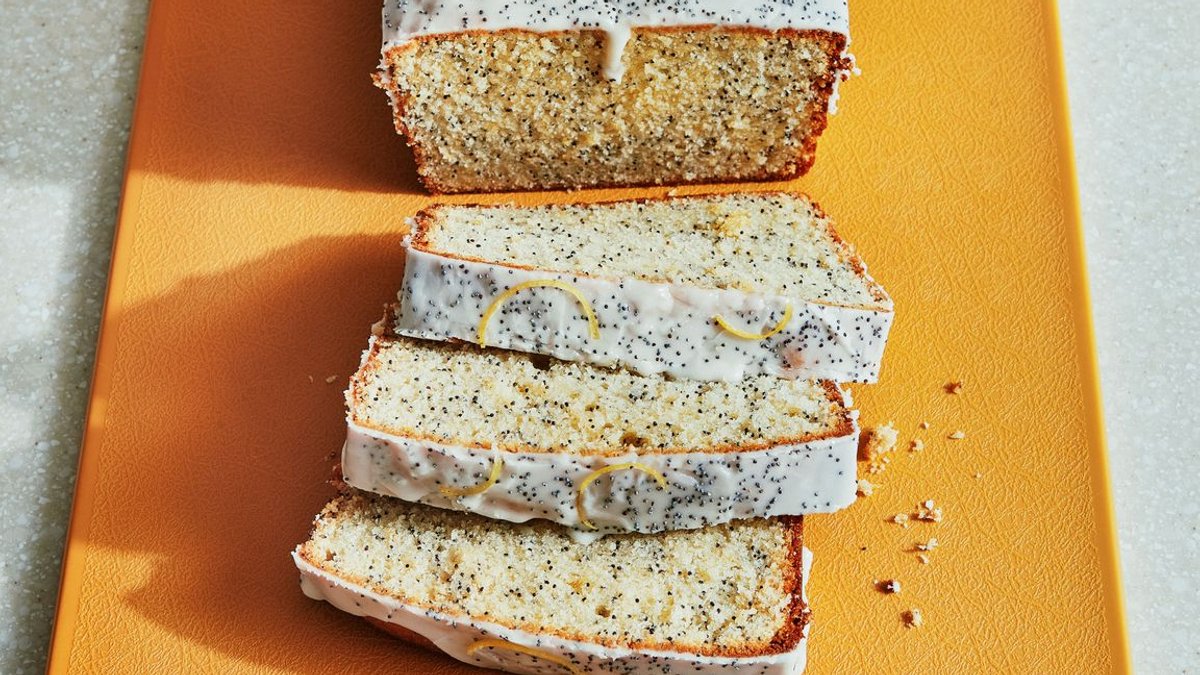
A lemon poppy seed loaf cake delivers a delicate crumb and vivid citrus taste, complemented by a light glaze that maintains its moisture. To start, the oven must be preheated to 325°F, and a 9×5-inch pan is prepared by greasing it with oil or butter, then lining it with parchment for effortless release.
The dry components, 2¼ cups all-purpose flour, 1½ teaspoons baking powder, and 1½ teaspoons Diamond Crystal kosher salt (or ¾ teaspoon Morton kosher salt), are combined in a medium bowl. Separately, the wet ingredients blend zest from 3 large lemons, ¾ cup unsalted butter, 1½ cups granulated sugar, 5 tablespoons vegetable oil, 2 tablespoons fresh lemon juice, and 2 teaspoons vanilla bean paste (or extract). These are whipped in a stand mixer until smooth and airy, requiring about 5 minutes.
The 3 large eggs are incorporated one by one, followed by half the dry mixture, then ¾ cup whole milk and the remaining dry ingredients. The batter is scraped down and mixed gently until uniform before folding in ¼ cup poppy seeds. A shallow slit is made down the center of the batter with a nonstick-sprayed knife to prevent uneven cracking.
Read Also: Creamy butternut squash pasta balances sweet and savory flavors
Baking lasts 60–65 minutes until the cake turns golden, springs back when pressed, and a tester emerges with minimal moist crumbs. After cooling briefly in the pan for 15 minutes, it is inverted onto a rack to cool fully.
The glaze requires 1 cup powdered sugar, 1 tablespoon fresh lemon juice, and a pinch of salt, adjusted with extra juice if necessary. Once thickened but still pourable, it is drizzled over the cake and sprinkled with poppy seeds or lemon zest while wet. The cake remains fresh when stored airtight at room temperature for up to 2 days.
This method avoids excessive mixing, which can produce a dense texture. The center cut ensures clean slices, while the glaze enhances shine and lemon flavor without overpowering the seeds. Unlike other citrus cakes, the acidity is tempered by the butter’s richness and the seeds’ subtle texture. Leftover batter can also be baked separately as a smaller treat.


