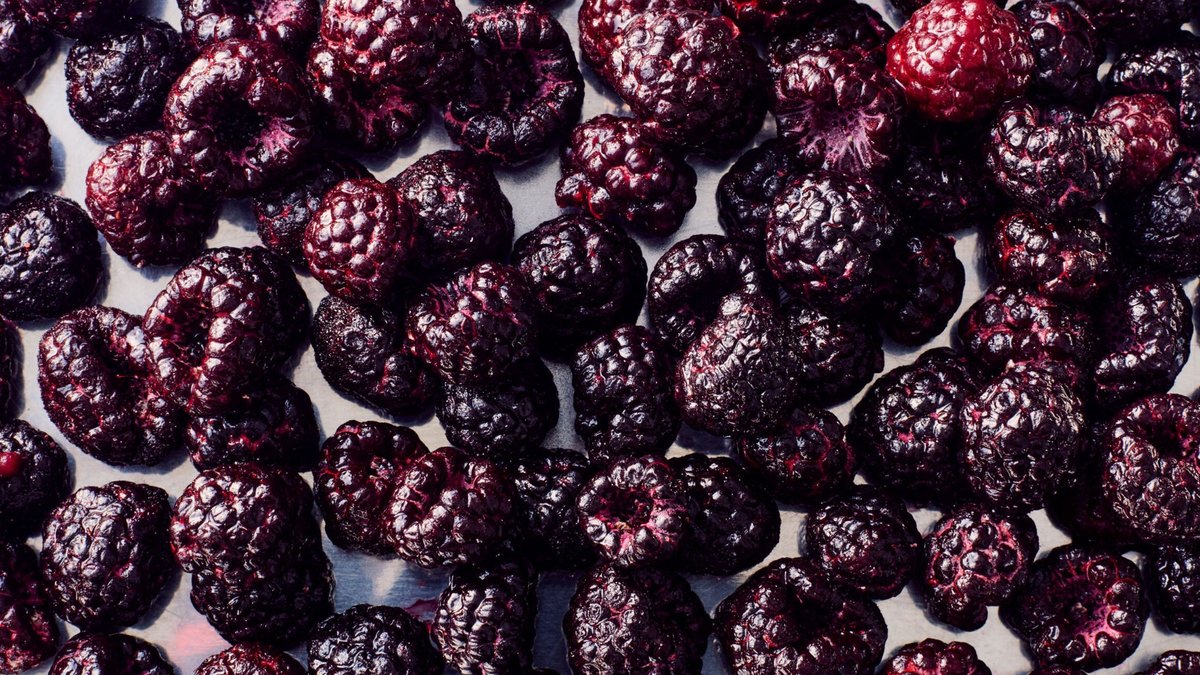
Black raspberries are a summer fruit that vanishes almost as soon as it appears. Every year, from the Great Plains to the Appalachians, tangled brambles yield clusters of tiny, deep-purple berries. Sweeter than a raspberry, less bracing than a blackberry, with a deep, almost wine-like complexity, this is the black raspberry, a native fruit that disappears just as quickly as it emerges each season.
The black raspberry, also known as blackcap or Rubus occidentalis, grows wild but rarely reaches grocery shelves. Its season lasts just two to three weeks, during which hand-picking is required, driving up costs. Those familiar with the fruit, however, insist it surpasses expectations.
Read Also: Global Hot Dog Styles Raise Traditional Recipe
Alan Bergo, author of The Forager Chef’s Book of Flora, describes the reactions of first-time tasters: Once you’ve tasted a ripe black raspberry, it’s hard to settle for anything else. “Ask anyone who knows the berries, though, and you’ll hear the same refrain: Once you’ve tasted a ripe black raspberry, it’s hard to settle for anything else,” he says. In the Northeast and Midwest, it’s a key ingredient in ice cream, where its rich flavor and color create a distinctive custard.
Bergo’s website, The Forager Chef, showcases recipes featuring black raspberries, from vinegars to glazes that complement duck or goose dishes. “It’s a great entry-level wild fruit,” he says. “It’s trusty and reliable and easy to work with.” The berry’s culinary value extends beyond contemporary kitchens. For centuries, Indigenous peoples—including the Iroquois, Anishinaabe, and Dakota—harvested black raspberries to preserve for winter.
Among the Lakota, the berries hold deep cultural importance. They’re used to make wóžapi, a sweet pudding, and winá, a blend of dried meat, berries, and fat. The leaves are also brewed into teas for digestive health and pregnancy support. Luke Black Elk, a Lakota chef, highlights their significance: “This is one of the super important berries to the Lakota people,” he says. In Lakota language, black raspberries are the standard, with red raspberries distinguished only by adding “red” as a modifier.
Read Also: Hybrid Grapes Thrive in New Hampshire’s Tough Climate
At Sherman’s Minneapolis restaurant, Indígena by Owamni, black raspberries are used as a summer glaze on elk ribs. In rural Pennsylvania, bakeries incorporate them into pies, puddings, and jams. Even at the U.S. Open, the fruit appears in the Honey Deuce cocktail, a mix of vodka, lemonade, melon balls, and black raspberry liqueur. Yet scarcity remains the berry’s greatest obstacle.
Black raspberries ripen for only a few weeks each summer, and harvesting them is labor-intensive. Courtney Weber, a horticulturalist at Cornell University, has spent decades attempting to develop a more reliable variety. The challenge stems from limited genetic diversity, but researchers achieved a breakthrough in 2013 by creating a variety that yields two harvests, a spring crop and an early fall one. While still uncommon, this progress suggests future possibilities for extending the berry’s season.


