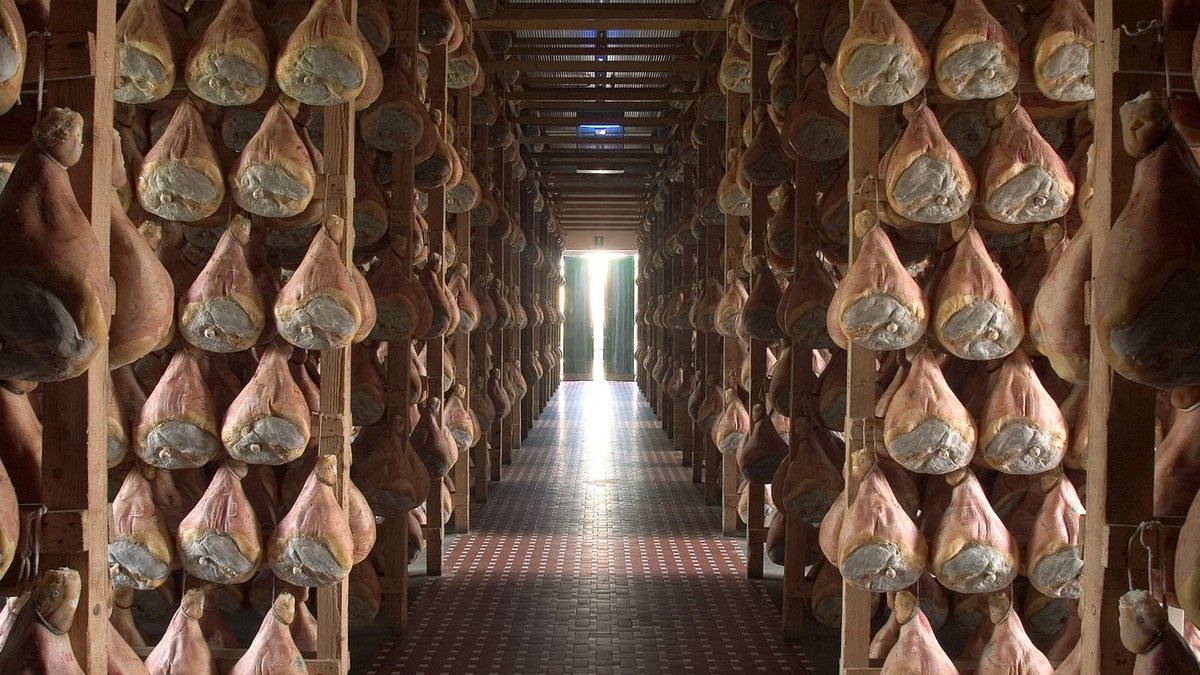
Prosciutto di Parma, often called the “King of Hams,” has a history stretching back over 2,000 years to Roman times. Its signature silky texture and sweet-savory flavor come from centuries-old traditions and precise production methods. Today, this delicacy is produced exclusively in the Parma province of Italy’s Emilia-Romagna region, where unique climatic conditions and local expertise combine to create the ideal environment for dry aging. Humid breezes from the Tyrrhenian Sea dry as they cross the Apennines, providing a natural setting that producers have long utilized for aging hams.
The process begins with carefully selected pigs, bred and raised in 11 Italian regions and fed a specific diet that includes whey from local cheesemakers. Each piglet receives a breeder tattoo within 28 days of birth, which is later transferred to the final product alongside the iconic five-pronged Ducal Crown brand. Only the hind legs of these pigs, weighing between 26 and 40 pounds, are used, with a precise fat coverage requirement to ensure quality.
From Pig to Prosciutto: A Year-Long Journey
Once the pork legs arrive at the production facility, they are trimmed, chilled, and hand-salted with sea salt—the only two ingredients used in Prosciutto di Parma PDO. After a 90-day resting period, the hams are washed and hung in windowed storerooms to dry slowly. These storerooms, designed with tall windows, allow producers to control airflow, a technique perfected over centuries. The next step, called sugnatura, involves rubbing the exposed parts of the ham with a mixture of pork fat, salt, and pepper to prevent it from drying too quickly.
Read Also: Asheville’s food scene thrives on local ties
For the final aging stage, the hams are moved to cool, dimly lit cellars. The entire process takes a minimum of 14 months, though many producers age their hams for 24, 30, or even 36 months or more. Before inspection, experts test the hams using a needle made from horse bone, chosen for its ability to absorb and release aromas quickly, ensuring they meet the strict standards of Prosciutto di Parma PDO.
Protecting Tradition: The Role of the Consorzio
The Consorzio del Prosciutto di Parma, founded in 1963, governs every step of production to protect the product’s authenticity. In 1996, Prosciutto di Parma received the European Union’s Protected Designation of Origin (PDO), ensuring it is made in a specific geographical area using traditional methods. This distinction is marked by a red and yellow seal and the Ducal Crown brand, guaranteeing consumers the real deal. The PDO status also ensures that the product is fire-branded, a further mark of authenticity.
The Consorzio, which started with 23 producers, now includes 125. In 2023, they produced 6.75 million Prosciutto di Parma PDO hams. Beyond its economic impact, Prosciutto di Parma is a cultural icon, celebrated at the annual Parma Ham Festival in September and showcased at a dedicated museum with a tasting room, attracting tourists from around the world.
Read Also: Bogotá’s cafés champion Colombian specialty coffee
A Slice of History
Prosciutto di Parma’s roots trace back to Roman times, when Cato the Elder, as early as the 3rd century BC, described methods for curing pork legs with salt and allowing them to dry and mature. Over centuries, these techniques evolved into the precise process we know today. Producers capitalized on the region’s unique climate by building storerooms with tall windows to control airflow, a practice still used today. The art of preserving pork through salting and natural drying was already well established in the Po Valley during Roman times, laying the foundation for this revered delicacy.
Whether enjoyed at the museum, a local specialty store, or on a charcuterie plate alongside Grana Padano PDO, Prosciutto di Parma offers a taste of history. Look for the crown and PDO seal to ensure you’re savoring the genuine article—a product of centuries of tradition and craftsmanship.


